 Hong Kong Campsites
Camping Safety in Hong Kong: Weather, Wildlife & Heat
Hong Kong's weather can turn dangerous fast. Know how to use the HKO app, what to do in a thunderstorm, how to handle wildlife encounters, and how to survive 90% humidity.
Safety First in the Outdoors
Hong Kong's subtropical climate creates lush forests and clear waters, and also generates violent thunderstorms, extreme heat, and conditions that can rapidly overwhelm an unprepared hiker or camper.
This guide covers the key safety topics every camper in Hong Kong needs to understand before their first overnight trip: weather monitoring, thunderstorm protocols, heat management, wildlife encounters, solo hiking safety, and emergency contacts.
1. Monitoring the Weather
Staying safe in Hong Kong's outdoors begins with understanding its two essential weather warning systems: the Rainstorm Warning and the Typhoon Signal system. Both are managed by the Hong Kong Observatory (HKO).
The HKO App and Website
- Download the myObservatory app (iOS and Android), the official HKO app and your most important safety tool
- Website: www.hko.gov.hk
- Check the 9-day forecast before any camping trip and the hourly forecast for your specific area
- Enable push notifications for warning signals; you want to know the moment a signal is issued, even in the field
The Rainstorm Warning System
| Signal | Colour | Meaning | Action |
|---|---|---|---|
| Amber | 🟡 | Heavy rain expected (30mm/hr+) | Be cautious; watercourses may flood |
| Red | 🔴 | Very heavy rain (50mm/hr+) | Avoid exposed terrain; seek shelter |
| Black | ⬛ | Extremely heavy rain (70mm/hr+) | Do not hike or camp; evacuate if in danger |
A Black Rainstorm Warning is a life-threatening condition. Hillsides can become rivers; streams that were ankle-deep become raging torrents within minutes. If you are camping when a Black warning is issued, evacuate to high ground away from streams and watercourses, or to a solid building if one is accessible.
The Typhoon Signal System
| Signal | Meaning | Action for Campers |
|---|---|---|
| Signal 1 | Typhoon within 800km; may affect HK | Monitor closely; prepare to leave |
| Signal 3 | Gale force winds near or within HK | Leave immediately; pack up your tent |
| Signal 8 | Gale force winds from a specified direction | Dangerous; all outdoor activity prohibited |
| Signal 10 | Extreme typhoon conditions | Seek shelter immediately |
The critical rule: If Typhoon Signal 3 is raised while you are at a campsite, leave immediately. Do not wait to see if conditions deteriorate further. A Signal 3 means gale-force winds are already reaching parts of Hong Kong, and conditions can escalate rapidly. Tents are not safe shelter in typhoon conditions.
Before Every Trip
- Check the 9-day forecast the evening before your trip
- Check the forecast again on the morning of departure
- Note the nearest shelter building or village to your intended campsite on your offline map
- Tell someone (at home or at work) your full itinerary: which site you are going to, how you are getting there, and when you plan to return
2. What to Do in a Thunderstorm
Thunderstorms are common in Hong Kong, particularly from April to September. They can develop rapidly, sometimes within 20–30 minutes of clear skies. The risk of lightning strike on exposed terrain is genuine.
If a Storm Approaches While Hiking
- Descend from ridgelines and hilltops immediately, because high ground is the most dangerous place to be during a thunderstorm
- Avoid isolated tall trees: lightning preferentially strikes the tallest object, and an isolated tree on open ground is particularly dangerous
- Move away from cliff faces and rocky overhangs, since ground current from a nearby lightning strike can travel through rock
- Seek low ground in a valley or depression (but not dry riverbeds, which can flash flood)
- If you are caught in the open, crouch low on the balls of your feet with your feet together, minimise your contact with the ground, and keep low; do not lie flat
If a Storm Arrives While You Are at the Campsite
- Get inside a solid building if one is accessible (country park warden offices, toilets, picnic shelters with solid walls)
- Stay away from your tent poles, which conduct electricity and are not safe shelter during lightning
- Move away from trees that overhang the campsite
- Do not stand in pooling water
- Stay away from streams that may flood rapidly
Never shelter under an isolated tree or at the entrance of a shallow cave during lightning, as both are classic locations for fatal lightning accidents.
3. Dealing with Heat and Humidity
Hong Kong's summer months (May–September) can push temperatures to 35°C with humidity consistently above 90%. These conditions create a real risk of heat exhaustion and heat stroke, even for fit, experienced hikers.
Understanding the Risk
In high humidity, sweat cannot evaporate effectively, so the body's primary cooling mechanism fails and body temperature rises faster than it would in a hot but dry environment. A pace that would be comfortable at 30°C in a dry climate becomes dangerous at 33°C and 95% humidity.
Heat Exhaustion
Signs: Heavy sweating, paleness, muscle cramps, weakness, dizziness, headache, nausea
Action:
- Stop all activity and rest immediately in the coolest available shade
- Apply wet cool cloths to the neck, armpits, and groin
- Drink cool water with electrolytes
- Fan the person vigorously to improve evaporative cooling
- If symptoms do not improve within 15–30 minutes, call 999
Heat Stroke
Signs: High body temperature (40°C+), hot and dry skin (sweating has stopped), confusion, slurred speech, loss of consciousness
This is a medical emergency. Call 999 immediately.
While waiting for help:
- Move the person to the coolest available location
- Remove excess clothing
- Cool rapidly with ice packs to armpits, groin, and neck
- Do not give water to an unconscious or confused person (risk of choking)
Prevention
- Hydrate consistently: Drink at least 500ml per hour of water during strenuous activity in summer; do not wait until you feel thirsty; by then you are already mildly dehydrated
- Use electrolyte replacement: Plain water is not sufficient for sustained exercise in high heat; carry electrolyte sachets or sports drinks
- Plan hikes for early morning (before 9am) or late afternoon (after 4pm) to avoid the peak heat of midday
- Rest in shade frequently, every 30–40 minutes during summer hikes
- Wear UV-protective, light-coloured, loose-fitting clothing
- Wet your hat and bandana at water sources to maintain head and neck cooling
- Consider a portable battery-powered mini-fan, surprisingly effective at the campsite in the evening
4. Wildlife Encounters
Wild Boars
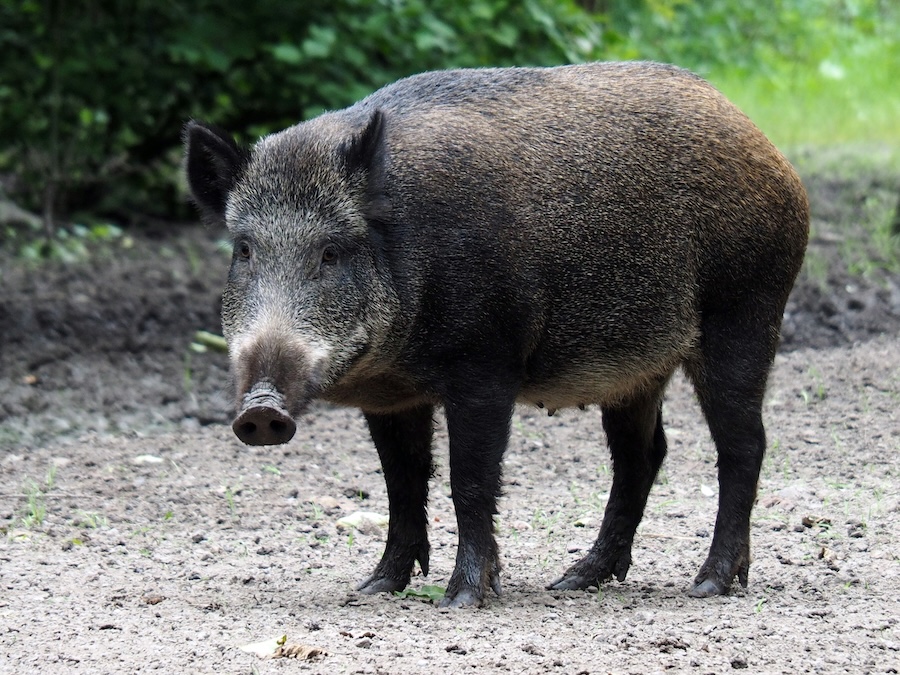 Photo by Ed van duijn on Unsplash
Wild boars are found throughout Hong Kong's country parks and are increasingly bold at popular campsites where they have been fed by humans. An adult wild boar weighs 80–100 kg and can cause serious injury.
Prevention:
- Store all food in sealed containers or hard-sided bags; never leave food out overnight
- Do not feed wild boars under any circumstances (it is also illegal)
- When hiking through known boar territory, make noise to alert animals to your presence; boars generally avoid humans they can hear coming
If encountered:
- Stay calm; do not run (running triggers a chase response)
- Make yourself appear large; raise your pack above your head
- Back away slowly in the direction you came from
- If a boar charges, stand your ground or move behind a tree; a direct charge is often a bluff
- Seek medical attention for any bite wound, as boar tusks can cause deep puncture injuries that are prone to infection
Macaques
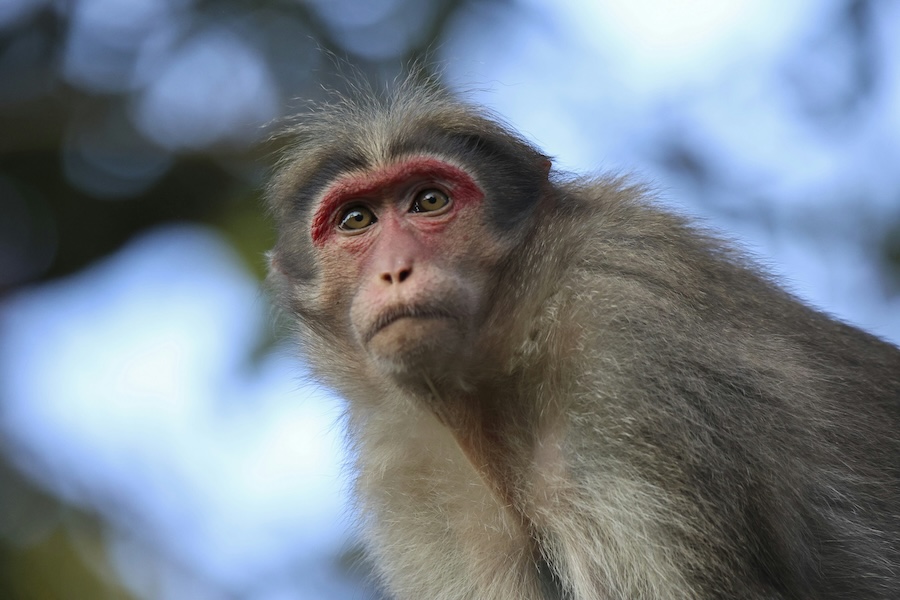 Photo by Daniel Pell on Unsplash
Long-tailed macaques have been present in some Hong Kong country parks for decades. They are intelligent, opportunistic, and have learned that campers and hikers carry food.
- Never show food openly in the vicinity of macaques
- Do not make direct eye contact; macaques interpret prolonged eye contact as a challenge
- Do not attempt to pet or handle macaques
- If surrounded by a group of macaques, do not show fear or make sudden movements; walk slowly away
- Report aggressive or injured macaques to AFCD via the 1823 hotline
Snakes
Hong Kong has several highly venomous snake species. The most dangerous include:
- King Cobra: The world's longest venomous snake; found in forested country parks. Neurotoxic venom; fatal without treatment
- Many-banded Krait: Nocturnally active; responsible for many serious bites. Venom is extremely potent; symptoms can be delayed
- Bamboo Viper: Bright green; ambushes prey from bushes and low branches. Haemotoxic venom
Prevention:
- Watch where you place your hands and feet, especially on rocky terrain and in vegetation
- Wear closed shoes or hiking boots at all times (not sandals)
- Use a stick to check ahead when walking through long grass
- Do not disturb rocks or leaf litter that may conceal a resting snake
If bitten:
- Stay calm; an elevated heart rate speeds venom absorption
- Immobilise the affected limb (below the level of the heart)
- Remove watches, rings, and tight clothing from the affected limb
- Call 999 immediately and describe the snake as accurately as possible
- Do NOT cut the wound, suck out venom, apply a tourniquet, or apply ice; these interventions are ineffective and can cause further harm
Wasps
Wasp nests (and hornet nests) are common in Hong Kong's countryside, often concealed in vegetation, holes in the ground, or overhanging rock faces. Asian Giant Hornets are particularly aggressive when their nest is disturbed.
- Move slowly and deliberately through dense vegetation
- If you disturb a nest, retreat calmly and quickly; do not swat at the insects (this escalates the attack)
- Multiple stings can be dangerous even for people without allergies; seek medical attention if you receive more than five stings or experience symptoms of anaphylaxis (breathing difficulty, swelling of the throat)
- Campers with known venom allergies should carry an epinephrine autoinjector (EpiPen)
5. Solo Hiking Safety
Hiking alone is a risk in any mountain environment. In Hong Kong's country parks, help is often hours away on foot from the most remote sites.
- Always tell someone your itinerary before setting out alone: the campsite name, your access trail, your planned route, and your expected return time
- Check in when you arrive at the campsite: send a message or call to confirm you have reached your destination safely
- Carry an emergency whistle: three blasts is the universal distress signal
- Leave the Hiking Safety Message via the HKO website or app: this feature allows you to register your hiking plan and automatically sends an alert if you do not check in by your nominated return time
- Do not hike in flip-flops or fashion sneakers; a twisted ankle on a remote trail can become a serious emergency
6. Emergency Contacts
| Service | Number |
|---|---|
| Emergency (Police, Fire, Ambulance) | 999 |
| AFCD Hotline (country parks, wildlife) | 1823 |
| Hong Kong Observatory (weather) | hko.gov.hk / myObservatory app |
| Government Emergency Hotline | 1823 |
The Hong Kong Mountain Search and Rescue team is deployed via the Police Emergency Number: 999. When calling for rescue:
- State your name and the number of people in your group
- Describe the nature of the emergency
- Give your precise location: trail name, nearest km marker, GPS coordinates if available
- Describe any injuries
- Stay on the line and follow instructions
Stay calm, conserve phone battery, and if possible move to an open area where rescue helicopters can see you and land.
Pack appropriately, monitor the weather, respect wildlife, and tell someone where you are going. The vast majority of camping trips in Hong Kong's country parks pass without incident, but knowing how to respond when something does go wrong could save your life or someone else's.