 Hong Kong Campsites
Camping in Hong Kong 101: AFCD Campsites vs. Wild Camping
Designated campsite or pitch-anywhere adventure? Learn the key legal and practical differences between AFCD's official campsites and wild camping in Hong Kong's country parks.
Two Approaches to Camping in Hong Kong
Hong Kong may be one of the world's most densely populated cities, but it is also home to 25 country parks covering nearly 40% of its land area. For anyone who wants to sleep under the stars, two broad approaches exist: using one of the more than 40 designated campsites managed by the Agriculture, Fisheries and Conservation Department (AFCD), or venturing off the beaten path to wild camp, pitching a tent somewhere that is not an official campsite.
The two approaches carry different legal standing, safety implications, and environmental consequences, and every Hong Kong camper should understand them before unrolling their sleeping mat.
AFCD Designated Campsites
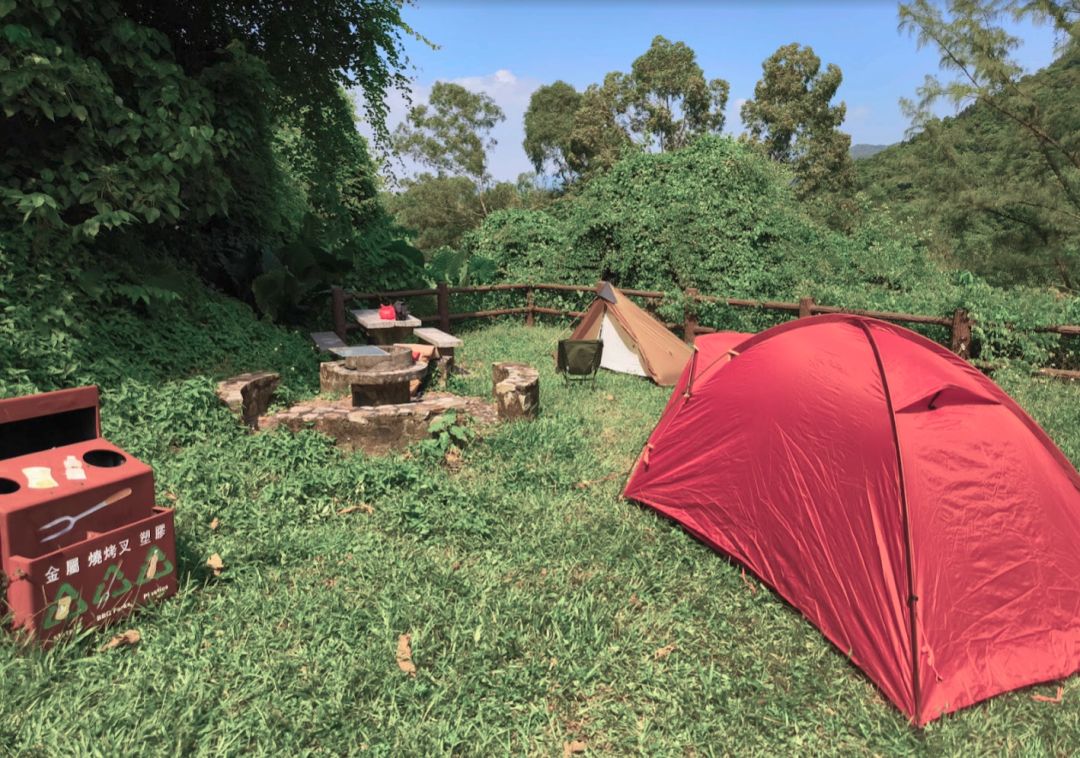
The AFCD oversees a network of designated campsites across Hong Kong's country parks and special areas. These sites are purpose-built for overnight camping and are the safest, most sustainable, and legally straightforward way to camp in Hong Kong.
What to Expect
- Cost: Free to use (trials for nominal fees at selected sites are planned to begin October 1, 2026; check the AFCD website for the latest updates)
- Booking: No reservation required for most sites; first-come-first-served. Twisk Campsite is one of the very few with an online booking system
- Facilities: Most sites have concrete BBQ pits, basic toilet blocks (pit or flush), and tap water or a nearby stream supply. Some remote sites are more basic
- Location: Set within country parks; accessed by hiking trails, road, or ferry
- Vibe: Communal, back-to-nature, self-sufficient, and completely above-board
Pros
- Legally permitted: You are camping exactly where the law intends
- Free or very low cost
- BBQ pits and toilets at most sites
- Wide geographic spread: beaches, hilltops, forests, and islands
- No need to worry about land ownership, trespass, or enforcement action
- AFCD wardens patrol regularly, providing a layer of safety
Cons
- First-come-first-served means popular sites fill fast, especially on Friday evenings and public holidays
- Facilities are basic: no electricity, and showers are rare
- Some sites require a long hike to reach
- You share the space with other campers; privacy is limited at busy sites
Who AFCD Sites Suit
AFCD campsites are ideal for most Hong Kong campers: hikers, families, school groups, scouts, and anyone who wants a genuine outdoor experience without legal uncertainty. If you enjoy sleeping under the stars with a BBQ and good company, this is the standard and recommended way to camp in Hong Kong.
Wild Camping in Hong Kong
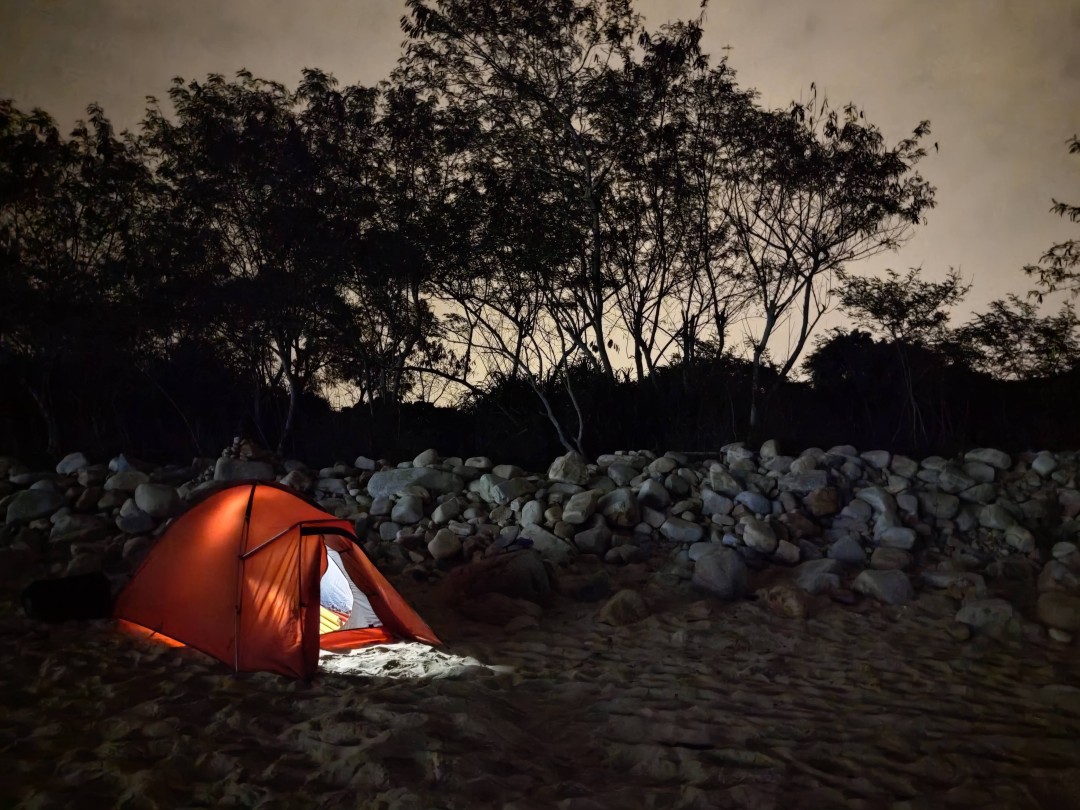
"Wild camping" means pitching a tent somewhere that is not a designated AFCD campsite: on an open hillside, a remote beach, a valley floor, or any other location within the country parks that has not been officially set aside for overnight stays.
The Legal Position
Hong Kong does not have a blanket law that explicitly criminalises sleeping outdoors in a country park. However, several overlapping regulations make wild camping a legally grey (and potentially risky) activity:
- Country Parks Ordinance (Cap. 208): The AFCD has authority to make bylaws restricting activities in country parks, including camping. Bylaws for specific parks may prohibit camping outside designated sites. Always check the bylaws for the specific country park you intend to visit at www.afcd.gov.hk
- Littering and fire regulations: The rules that apply at designated sites, including the HK$3,000 littering fine and the prohibition on open fires outside designated BBQ areas (penalty up to HK$25,000), apply equally to wild campers, and may be harder to follow without facilities
- Private land: Not all land that looks wild is public. Pitching on agricultural land, village land, or other private property can constitute trespass
- Marine parks and special areas: Overnight camping is prohibited in many marine parks and special areas without a specific AFCD permit
In practice: AFCD wardens generally tolerate low-impact wild camping in open country park areas that are not explicitly restricted, provided campers leave no trace and are not in a prohibited zone. However, this is tolerance, not a right, and enforcement posture can change.
Practical Realities
Even setting aside the legal ambiguity, wild camping in Hong Kong presents challenges that designated campsites solve:
- No BBQ pits: You cannot legally light a fire outside a designated BBQ area, so cooking means a gas stove only
- No toilets or water: You must pack in all water and manage human waste responsibly (cat hole, 60 metres from any water source, pack out toilet paper)
- No infrastructure if things go wrong: No warden, no emergency phone point, and potentially very difficult access for search-and-rescue
- Leave No Trace is harder: Without a designated waste point, every scrap of rubbish must leave with you
Where Wild Camping Is Most Common
Experienced HK campers who wild camp tend to choose:
- Remote coastal headlands in Sai Kung East Country Park: away from the main trails, with dramatic sea views
- High mountain ridges on the MacLehose or Wilson trails: sunrise views, accepted as a long-standing hiking tradition
- Outer island beaches not served by an AFCD campsite: access is so difficult that warden presence is minimal
These are also the areas where self-sufficiency, navigation skills, and weather awareness are most critical.
Who Wild Camping Suits
Wild camping in Hong Kong is best suited to experienced, well-equipped campers who are comfortable with navigation, self-rescue, Leave No Trace principles, and operating in legal grey areas. It is not recommended for beginners or groups without backcountry experience.
Side-by-Side Comparison
| Feature | AFCD Designated Campsite | Wild Camping |
|---|---|---|
| Legal status | Fully permitted | Grey area / varies by park |
| Cost | Free (or trial fee) | Free |
| BBQ pits | Yes | No (gas stove only) |
| Toilets | Most sites | No |
| Tap water | Most sites | No (carry or filter) |
| Privacy | Limited at busy sites | High |
| AFCD warden presence | Regular patrols | Minimal to none |
| Recommended for beginners | ✅ Yes | ❌ No |
| Leave No Trace difficulty | Easy (bins, pits provided) | Hard (pack everything out) |
The Responsible Choice
For most campers, especially beginners, designated AFCD campsites are the right answer. They are free, widely distributed, legally unambiguous, and equipped with the basics you need for a safe and enjoyable night out. Sites like Pui O Campsite, Nam Shan Campsite, and Ham Tin Wan Campsite in Sai Kung offer stunning natural settings with the peace of mind that you are camping where you are supposed to be.
Wild camping has its place in Hong Kong's outdoor culture, but it demands a higher level of skill, preparation, and environmental responsibility. If you do choose to wild camp, research the specific bylaws for your country park, carry out every trace of your visit, and have a solid plan if the weather turns.
Tips for First-Timers
- Start at a designated AFCD site with tap water and toilets: Twisk Campsite or Pui O Campsite are excellent first choices
- Arrive early (Friday afternoon) at popular first-come-first-served sites to secure a spot
- Check the AFCD website for campsite facilities and any current bylaws or closures at www.afcd.gov.hk
- Pack a gas stove even at designated sites; it gives you flexibility if the BBQ pit is occupied
- Download the HKO Weather app and know the typhoon signal and rainstorm warning systems before you go
- Tell someone your itinerary and check in when you arrive and when you return